Final Project: A Day in Chinatown
Our final project for BH 430, focused on epidemics, politics of blame, and eugenic and racial logics in shaping US health policies, gave us creative freedom in going about publishing an outward facing project to share what we learned in class to the general public. We decided to take a walk in our very own Seattle Chinatown International District, with the intention of exploring important sites and figures, researching historical impacts, and synthesizing our findings. We have been to Chinatown many times before with friends and family, but even so, this trip was eye-opening, concerning, and inspiring in many ways. Without further ado, please enjoy our final project. (Pictures by Michelle!)
Pictured above: The Historic Chinatown Gate- a modern Paifang archway built in 2007- welcomes visitors and residents.
Introduction
Despite its popularity as a diverse and progressive city, Seattle has a history of segregation that still carries on with it to this day. In this work, we spotlight Seattle's Chinatown - International District (CID). Home to vibrant colors, and delicious foods, but victim to Seattle’s history of racism. Fueled by ideologies of yellow peril and misinformed association with disease, the International District showcases the modern-day stakes of historical segregation to disproportionately and negatively impact Asian Americans. However, it is also a reminder of the resilience and persistence that runs deep within the Asian American community, who have persevered through the hardships.
But first, some historical context…
The Yellow Peril, a racialized belief that those from South and East Asia pose a threat to Western civilization, promoted through the use of specific rhetoric that places them as vectors of diseases seeded in America the general fear around the Asian community and fueled discrimination countrywide. Seattle is no exception.
Asian Americans have outnumbered other immigrant groups in Seattle historically and were the first group to have segregation imposed on them. In 1886, the initially tight and confined Chinatown was destroyed and the Chinese settlers were forced to flee. Those that remained, rebuilt Chinatown along King St., and later in the 1900s, Japan town was built next to it - becoming the largest nonwhite group in Seattle. In 1942, Japanese Americans were sent to internment camps and Japan Town perished. This dense rise and fall of Asian American populations within this defined area has been constant throughout history (Explore this interactive map of King County’s residential distribution of racial populations through the decades for better visualization). Rules of segregation (i.e. deed restrictions) were maintained until 1968 when Seattle’s City council enacted a law banning racial discrimination in housing. However, residential patterns continued these already established trends of displacing marginalized communities into poorly kept areas well into the 21st century. While there are no longer direct laws or deeds that promote these segregations, it is still maintained in less visible ways - such as infrastructure.
Reference: https://depts.washington.edu/civilr/segregation_maps.htm


Pictured above: Hing Hay Park, built in 1973, is the heart of Chinatown.
It’s still here
Seattle’s Chinatown International District faces a multitude of external pressures that would lead to its erasure. A majority of these factors are a result of the decisions made by public municipalities and affluent corporations seeking to gentrify the area, subsequently displacing the community. Although these decisions can sometimes bring much-needed improvements in transportation, sanitation, and other important services, they run the risk of erasing the rich and beautiful cultural sanctum that is home to a variety of Asian American communities.
Public municipalities, like Sound Transit and Seattle’s Department of Transportation, play active roles in the displacement of residents, businesses, and cultural heritage sites. Construction projects for transportation often require the demolishment of certain buildings and sometimes entire neighborhoods. This can force residents and business owners to move out of necessity and often impacts the low-income members of the community the hardest.
Expand each accordion item below to read about current challenges the community faces. Feel free to click on the hyperlinks for further reading!
-
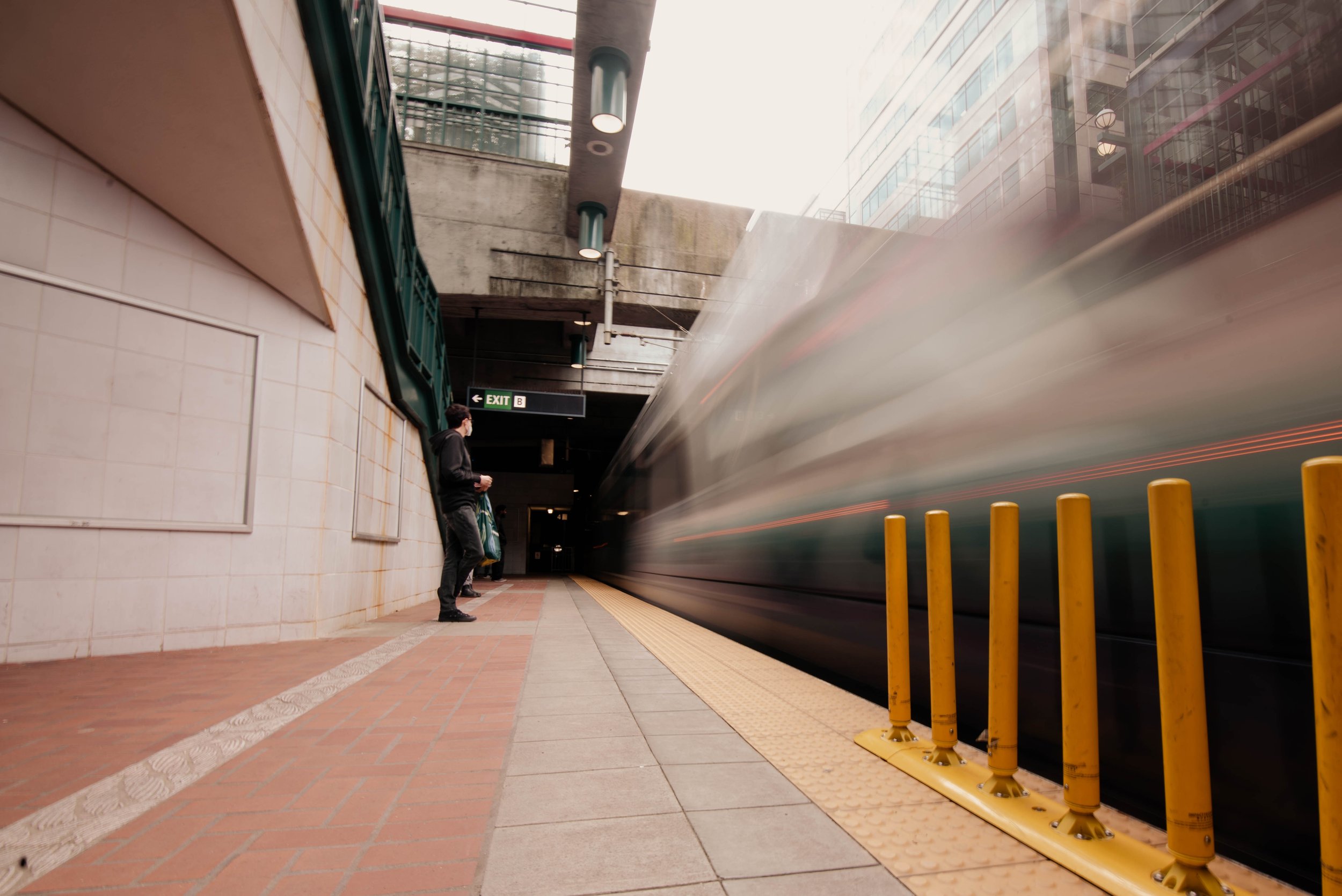
An example of a project pushed by the Transportation Department that would lead to the desecration of Seattle’s Chinatown International District (CID) would be the proposed construction of another light-rail station. This project would provide a new tunnel that acts as a hub for riders to change their train depending on their destination. However, this construction project would take almost 9 to 11 years and create a heavy amount of traffic and debris. On top of that, it would economically devastate the area and lead to the relocation and/or harm of current residents and business owners, especially low-income immigrants who have nowhere else to go in Seattle. Betty Lau, a resident and prominent leader in CID, states the most glaring sentiment felt by most residents: “we’ve always taken the least desirable land, and as soon as it becomes valuable, we get pushed out”. This highlights the systemic racism embedded within policies of public infrastructure - policies that disproportionately impact marginalized people of color over white communities.
-
To add fuel to the fire, despite the threat of displacing residents from their homes, the local government has made little to no effort in providing and creating affordable housing projects. Instead, their efforts have been focused on the expansion of nearby homeless shelters, with the latest one costing almost $22 million dollars to operate. Not only are community members upset about the inability of the city council to address the root issue of the homelessness, but they are also frustrated about the lack of involvement the community had in the decision, even though they would be directly impacted. Moreover, community members have pointed out that there are empty lots, buildings, and unused space in affluent and predominantly white neighborhoods that could have been used instead.
-
The threat of CID’s erasure is real; one of the biggest ones is the increasing wave of development that is swallowing up Chinatown. Leslie Morishita, a Real Estate Development Director at InterimCDA, notes that the neighborhood’s new and unprecedented developmental pressures and projects would drive up property values and rent, resulting in gentrification of the district. This makes it immensely difficult for the community to construct affordable housing for marginalized and low-income communities. An example of one of these projects was the construction of the King Dome (reconstructed in 2002 and now called Lumen Field). The construction of the stadium increased traffic, decreased parking spaces, and caused displacements that would erode the community. Community leaders like Bob Santos, dubbed the unofficial mayor of CID, Nemesio Domingo, and Mayumi Tsutakawa were vocal about these issues at city hearings and hundreds of community members marched in protest . This came at a time when improvements in low-income housing for the elderly and community health services already stretched the community’s resources thin. The building of the Kingdome stadium would be only one of many passes between the CID and the entertainment corporations of Seattle.
Additionally, the increase in property value/rent acts as a cost-prohibitive barrier for non-profit organizations to help the residents in the area and leads to the displacement of local residents. The CID ranks among the highest in displacement risk according to the Seattle 2035 Growth and Equity report, and we are witnessing it firsthand. The gentrification of CID, as a result of developmental pressures, is a looming hazard that has united the community to advocate for legal home and business ownership.



The community responds
A mixture of anti-Asian hate and rising crime, compounded by Seattle’s neglect, has left CID residents to fend for themselves. These high crime rates are observed in different city’s Chinatowns across the country as a result of historical redlining. By forcing people of Asian descent to live in the then-undesirable section of a city, drugs, homicide, property theft, etc. are frequent. People who commit these crimes are usually not residents themselves, but rather people who know the City social and police forces will take longer to respond to crime reports in Chinatown - if they even respond at all. Increased living expenses have also displaced International District residents in cities across the country. While people have brought these issues to light in regards to Seattle’s Chinatown, local government still has a long way to go to ensure residents feel safe, supported, and heard.
Community activists have taken action and formed outreach groups to mediate the effect of the City’s neglect and make life easier for residents. Such groups include Chinatown International District Community Watch and CID Monthly Community Clean-up.
Public safety and social services have been a priority for CID outreach groups, now more than ever. The number of unhoused individuals has increased since the pandemic, as shelters offer less beds in adherence to social distancing guidelines. Houseless individuals are drawn to CID because they know they are less likely to be forcibly removed than if they stay in other parts of the city (e.g. outside corporate buildings). Additionally, people are more likely to commit acts of vandalism because they know little to nothing will be done to catch perpetrators. The streets are more unkempt than other parts of the city, leading to events/groups like the aforementioned CID Monthly Community Clean-Up that were formed out of necessity for such services.
Expand each section below to read more about these outreach groups.
-
Chinatown International District Community Watch is a small volunteer group that aims to improve both public health and public safety by patrolling at night. They hand out food, clothes, and kind words to those without shelter and keep an eye out for illegal conduct. The group’s route passes neighborhood landmarks, which are also safety hotspots. They pass by Hing Hay Park, the Louisa Motel, Wing Luke Museum, a Homeless Encampment under the I-5 overpass, a Public Safety Hotspot on S. Jackson St. and 12th Ave S. in Little Saigon, and Danny Woo Community Garden.
-
CID Monthly Clean-Up is another small volunteer group that aims to improve public safety by cleaning up the neighborhood streets and parks. Once a month, on Saturday, three groups of volunteers meet to clean up Little Saigon, Japantown, and Chinatown.
During the COVID-19 pandemic, Asian Hate Crimes dramatically increased, especially in the International District. Vandalism and violence became worse than ever. Most businesses boarded up their windows and doors to prevent break-ins and to protect themselves from both physical and financial damage. Chinatown business owners explained to local news stations that if they use their insurance coverage to cover the cost of a broken window more than a couple times, their insurance provider will drop them and refuse to renew their policy. As a result, many business owners paid for broken windows out-of-pocket to avoid losing their insurance. Today, some businesses remain boarded up. Yet many of them have beautiful artwork painted over the plywood; a sign of resilience and a creation of beauty out of hate.
The systemic abuse and neglect experienced by the CID is not a failure of the system. Rather, the system is working exactly the way it was designed to - to benefit those in power and harm marginalized communities of color. It is important to acknowledge and understand the tumultuous history and present-day relationship between the CID neighborhood and the City of Seattle. Only then can there be a deeper deconstruction and de-racialization of the social institutions and systemic forces at work.


Pictured above: Community efforts to rebuild, restore, and remember.And in the midst of it all, individuals heroically rise up to advocate for and protect the CID from erasure and from harm. Among them are Donnie Chin and Bob Santos.
Expand each section below to read more about these inspiring figures.
-
There have also been medical centers and civilian first aid services started by CID members over the years. Donnie Chin was one such person, and became known as a community hero. He had a desire to help others in the CID community and provided care and medical treatment to those in need. In 1968, he founded the International District Community Center, a non-profit for those in need of medical care. He first had a call line to the local fire department, and later became a civilian paramedic. Always first on the scene, he would arrive on foot, carrying a 40+ lb bag of supplies. He worked with a physician at Harborview Medical Center to create Medic One, a non-profit foundation that provides advanced emergency care. Donnie inspired those around him to give back to the community and his sister Connie carries on his legacy through their family-owned and -run store, SunMay Co. We got to meet his sister by accident on our walk through downtown and got the honor of hearing his story through her. Read more from our conversation with her here.
-
Another community hero, Bob Santos, former Director of the International District Improvement Association, opposed construction of the Kingdome in the 1970s. In his testimony, Santos highlighted unmet commitments the City had made to the CID, particularly the false promises made to meet residents’ social services and housing needs. He argued that the Kingdome was another way the city deprioritized the International District’s needs and allocated funds elsewhere, such as the entertainment sector. Construction of the new stadium would affect property expenses and displace residents, he argued. As a result of adamant protests orchestrated by Santos, the City was able to fund desperately-needed services in the CID. Bilingual social workers were hired to assist CID elders and qualify them for social and meal services. The City opened an outreach clinic of the Pioneer Square Clinic in the CID, which with help of UW medical students, is now the International District Health Clinic. All of this and more are direct and indirect results of Santos’ work. Santos was the driving force behind advocacy for and preservation of the Seattle CID.
Final thoughts
As we took the train back to campus from the CID, we quietly reflected on the day’s adventures. It wasn’t our first time in the CID, as it was a popular site of attraction for UW students to eat at the delicious restaurants and hang out over the weekend or after a sports event at the stadium. This time felt different though. It was hard to describe how exactly we felt. It was a mix of enlightenment with the new knowledge, worry for the future of the CID, and inspiration by the resilience of the community.
One of the recurring themes for our class is that the stories we tell create our reality. Before this final project, we weren’t aware of most of the matters we wrote about in this article. In fact, a lot of them predated us. But we wanted to tell the story of CID in hopes of helping the CID. One of the last sites we visited during our walk was the Danny Woo International District Community Garden, which was built in the 1970s with Hing Hay Park. On top of being a large community space, it has a chicken coop, children’s garden, outdoor kitchen, and a fruit tree orchard 77 trees strong. Its existence is a reminder to the citizen of the CID the power they hold in their resilience and unity, and we wanted to end on this note. The CID stands where there is community.
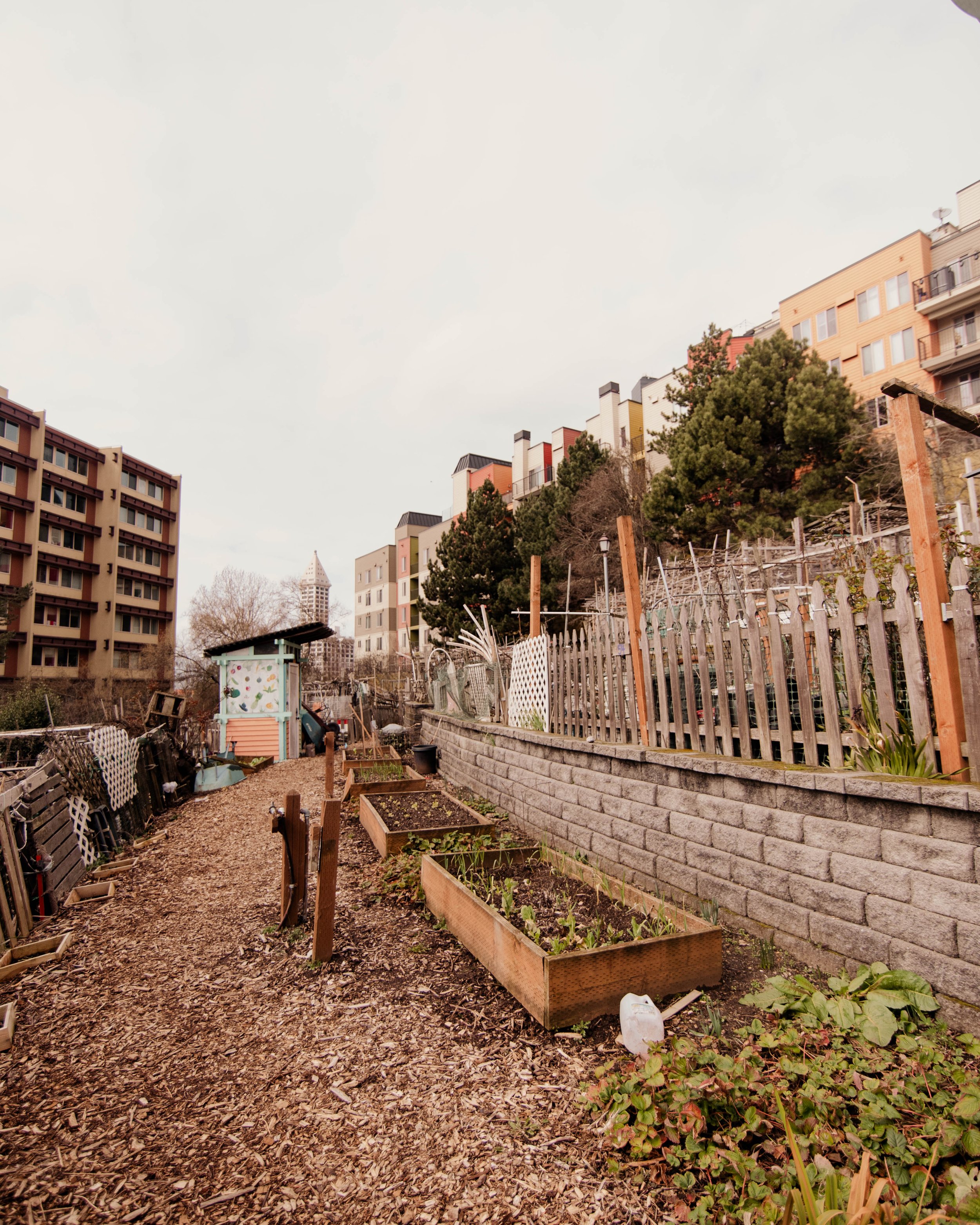
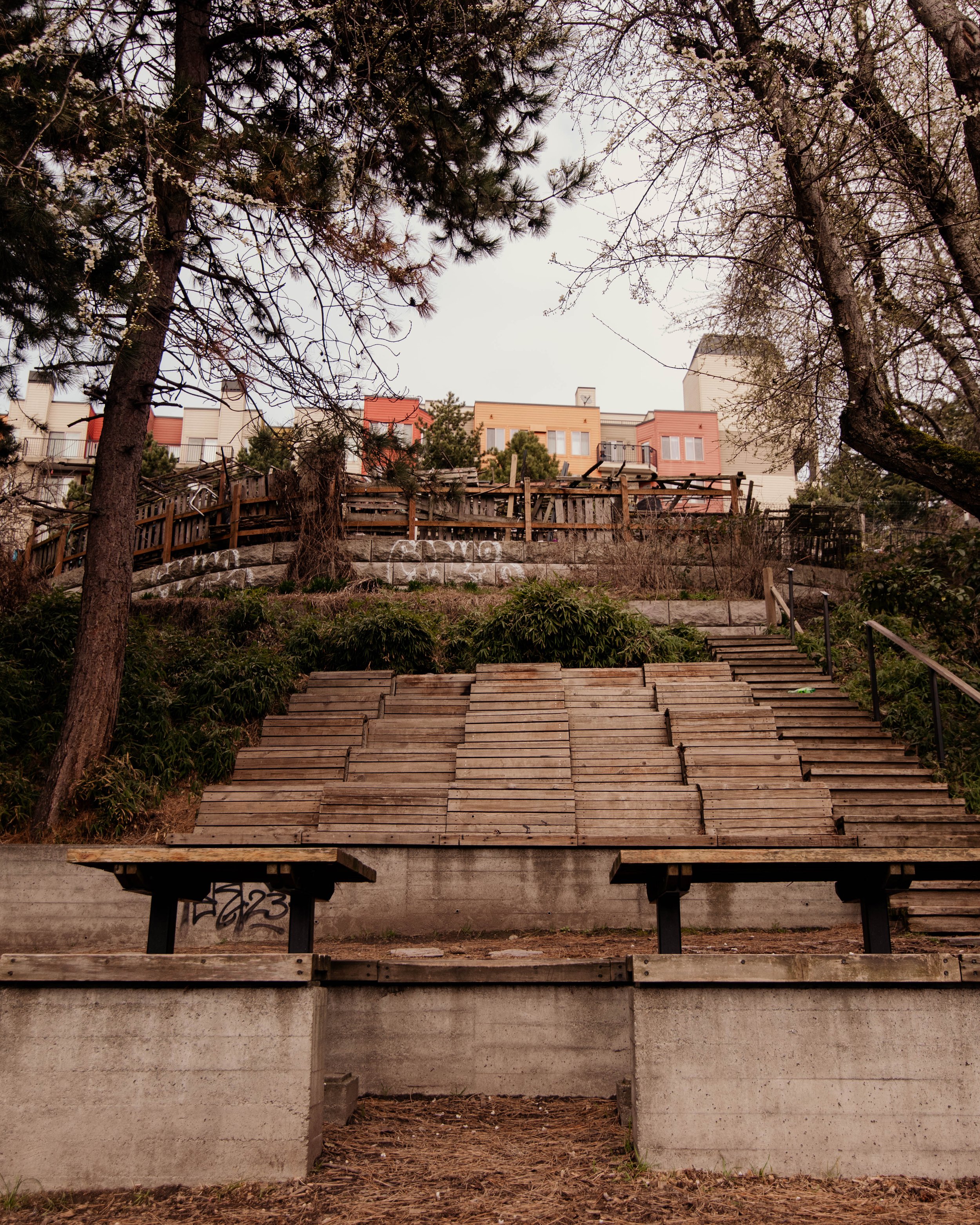


Pictured above: Danny Woo International District Community Garden built in the 1970s- a symbol of unity to create community between the various groups in the International DistrictInterested in helping advocate for the Asian American communities in the CID? Check out these links!
Volunteer to help run big events in the CID like Dragon Fest and C-ID Night Market here.
Help keep the CID clean through monthly meet ups to pick up trash around CID here.
Donate to SCIDPDA to help fund affordable housing and community spaces, to name a few, here
Volunteer to help deliver services to residents in their preferred language here
And of course, don’t forget to support small owners and businesses in the CID, either in-person or online here.

Meet the authors of this post!
From the front going clockwise: Maryann Vu, Mercy Johnson, Michelle Nguyen, Joshua Vo